


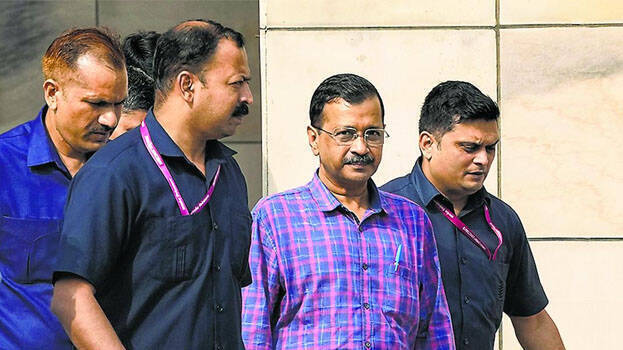
In a dramatic legal development that has captured national attention, a Delhi court on February 27, 2026, discharged former Chief Minister Arvind Kejriwal and 22 others accused in the controversial Delhi excise policy case, concluding that the prosecution failed to establish any credible evidence or make out a prima facie case against them.
The decision by the Rouse Avenue Court came after months of intense legal battle and scrutiny, during which both the Central Bureau of Investigation (CBI) and other agencies pursued allegations of corruption and conspiracy linked to the now-scrapped 2021–22 excise policy. The policy was initially challenged by Lieutenant Governor VK Saxena, who had alleged irregularities in its formulation and execution, claiming it unjustly benefited certain private liquor contractors and led to financial losses for the Delhi government.
Why the Court Discharged the Accused
Special Judge Jitendra Singh cited a lack of credible evidence and absence of concrete links tying Kejriwal and his co-accused to any criminal intent or conspiracy. The court observed that the CBI’s chargesheet — although voluminous — suffered from internal contradictions and gaps, making it incapable of sustaining the serious allegations it contained. In fact, the judge emphasized that the prosecution failed to show any “overarching conspiracy” or establish a clear criminal narrative.
Legal experts note that this judgment effectively ends the judicial proceedings in this case at the trial level, as the court refused to take cognizance of the chargesheet against any of the 23 accused — a rare and significant outcome in high-profile political cases.
Reactions and Political Fallout
As soon as the verdict was announced, there were emotional responses from Kejriwal and his supporters. The former Delhi CM reportedly broke down on camera, calling the verdict a proof of his honesty and integrity, and urged national leaders to focus more on public service than political battles.
Leaders within the Aam Aadmi Party (AAP) hailed the ruling as a “triumph of truth,” asserting that the entire case was politically motivated and designed to undermine their governance. Some statements from party members described the case as a politically engineered campaign intended to destabilize the party’s leadership.
What Happens Next?
While the court has cleared Kejriwal and others of all allegations in this specific case, the legal controversy may not be over. The CBI has confirmed its intention to appeal the judgment in a higher court, signaling that a legal battle could continue even after this major verdict.
Analysts believe that this judgment could have wide-ranging political implications as India gears up for upcoming elections, affecting narratives around governance, accountability, and the relationship between investigative agencies and political figures.
Also Read: Arvind Kejriwal conspiracy allegations
Source: Times of India